
What this 90-minute Workshop Looks Like
The workshop begins with a whole-class Learning Zone session.
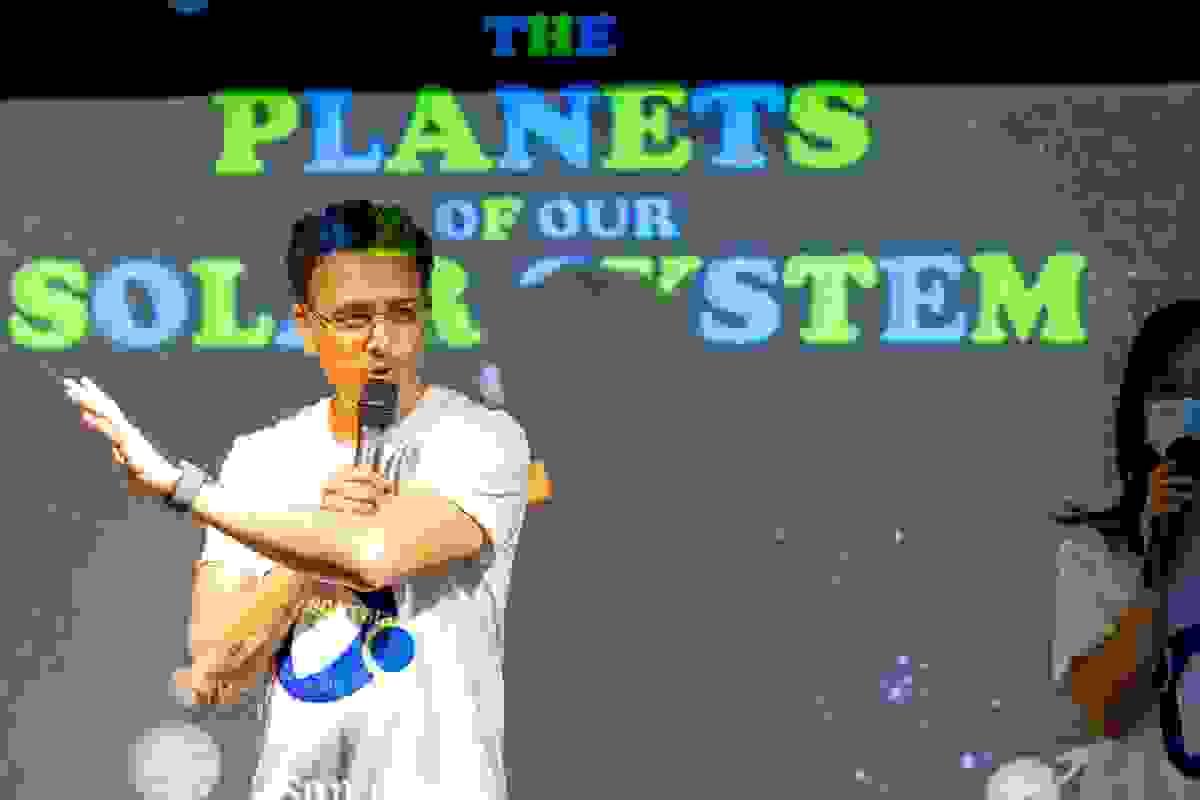
Learning Zone - PowerPoint Presentation
Teacher guides all students through a 25-minute astronomy PowerPoint presentation. This ensures every student starts with the same foundational knowledge before moving into hands-on and immersive activities.

Group A - Hands-On Activity Station
Students work on a tactile astronomy project, such as building a solar system model or playing an educational game like Inner and Outer Planets Sort. When students finish early, they transition to a designated “layover room,” where they complete pages from the astronomy workbook we developed.
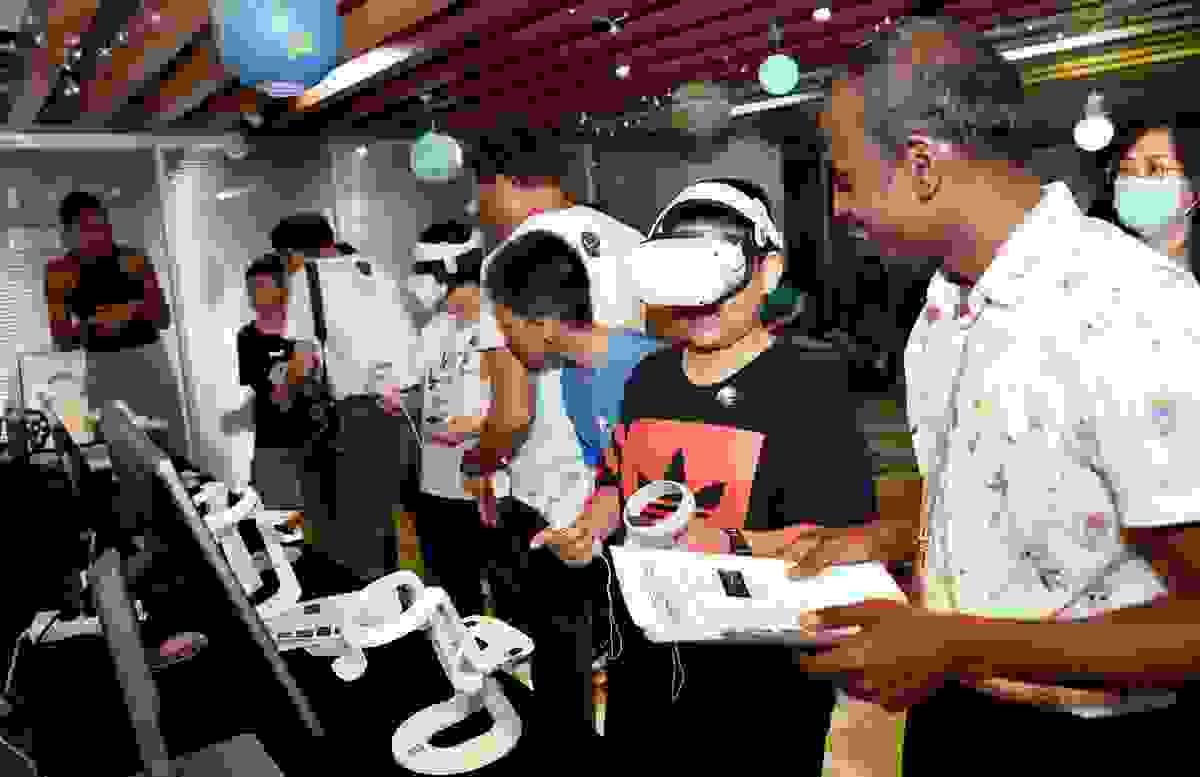
Group B – VR Exploration Station
Students rotate three at a time into our VR experience, where they explore a detailed 3-D universe, planets, stars, orbits, and cosmic phenomena, directly connected to what they learned in the Learning Zone.
After the allocated time, the two groups switch stations, ensuring every student participates in all parts of the workshop.
Workshop Flow

Step 1: Teacher-led Astronomy PowerPoint (PPT) Lessons (All students)
A short, open-ended discussion activity that invites students to share what they already know about the solar system and planets. This is not a test, there are no right or wrong answers. It helps activate prior knowledge and encourages curiosity before the lesson begins.
PowerPoint Lessons (3 Age Levels)
Three age-appropriate PowerPoint lessons are included so teachers can choose the best fit for their students:Ages 7–9: Planets Overview
Ages 9–11: Planets & Space Overview
Ages 11–12: Planets, Surfaces & Moon Phases

Step 2-A: Hands-On Activities
Students reinforce learning through hands-on sorting activities, short assessments, and a structured workbook that deepens understanding of planets, orbits, moon phases, and space exploration.
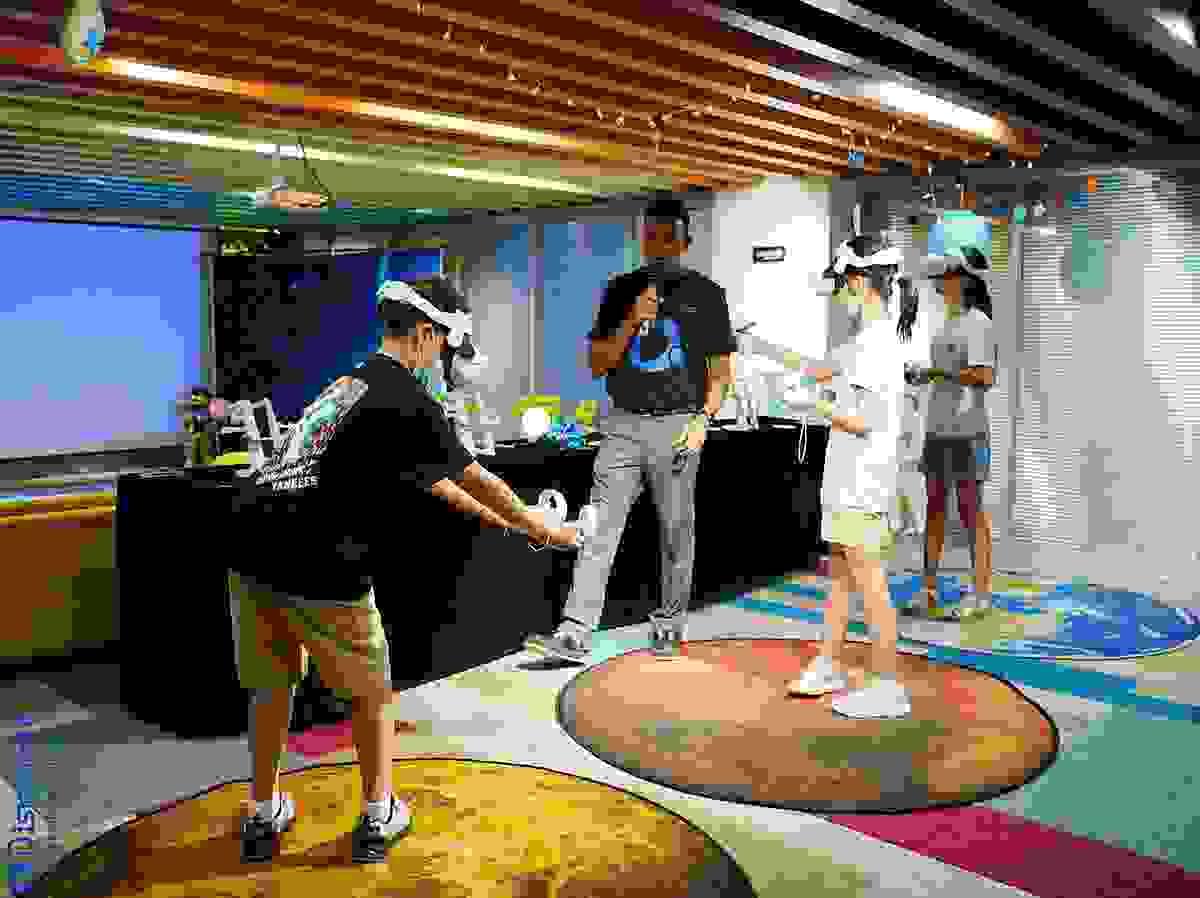
Step 2-B: VR Exploration: Solar System VR Activities
(Designed for Meta Quest)
Students explore the Solar System in a guided 3D VR experience, reinforcing key astronomy concepts through an immersive, age-appropriate journey among the planets.

Step 3: Reflections and Assessments
Post-Workshop Student Reflection:
Students reflect on their learning through guided writing and optional quizzes that reinforce and extend key astronomy concepts.
Follow Us On Social Media


